SQL Database Defragmenter — Beta — Registration Now Open
See What's Beyond SQL Server Index Fragmentation
Starting October 26, 2026
Evaluate SQL Database Defragmenter (SQLDBD) — the next generation of SQL Server fragmentation management.
SQL DBD identifies Physical (MDF) fragmentation and provides the capability to defragment the entire MDF file in addition to logical index fragmentation.
Why address only index fragmentation when you can address MDF and index fragmentation?
Register Now to Participate in the SQLDBD Beta
All participants will enter a raffle to win a Galaxy Tab S10 FE 5G!
Patent Pending Technology
The Most Complete SQL Server Defragmentation Solution! – Changes the Game!

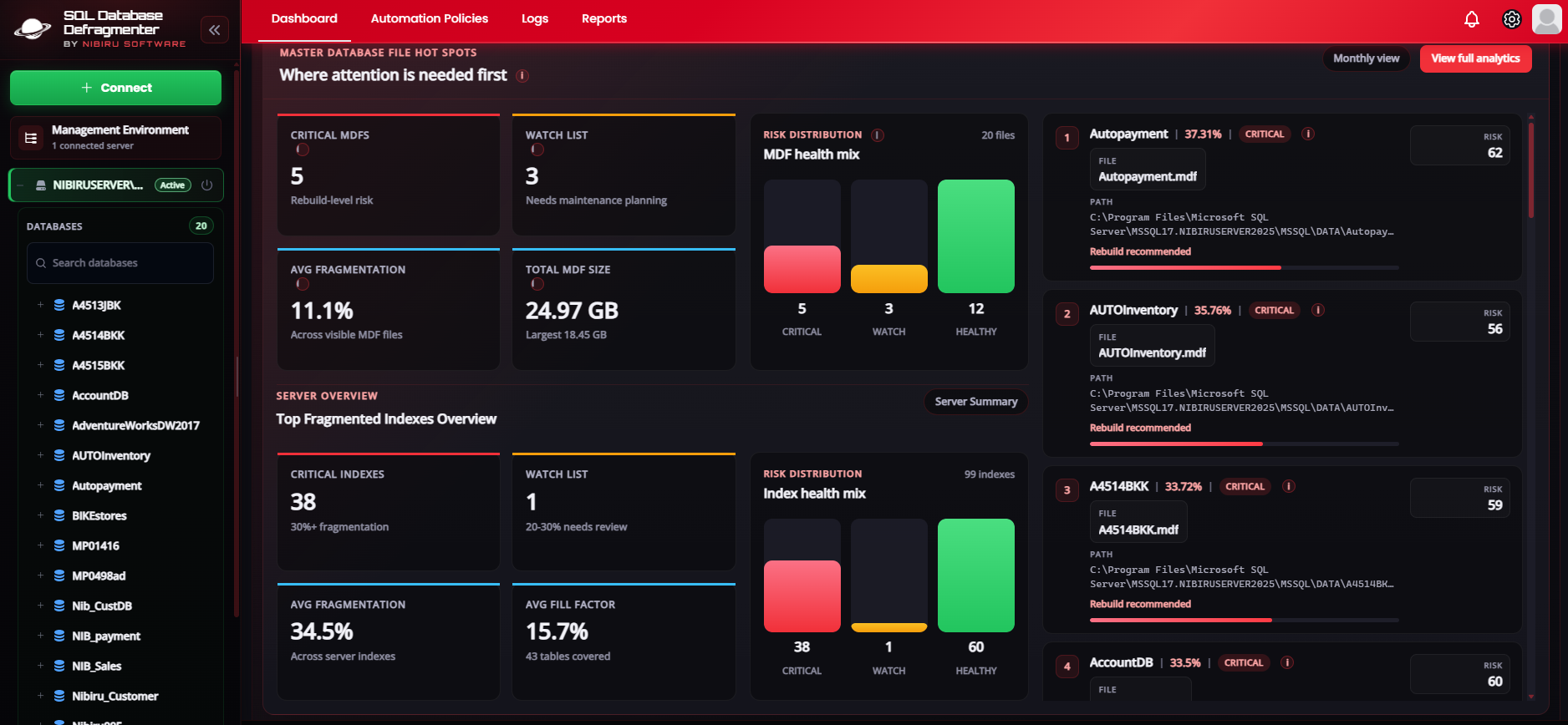
SQL Database Defragmenter Dashboard - Database File and Index Health Summary
Monitor "Master Database File" fragmentation across your SQL Server environment and quickly identify server, database and index level hotspots.
Server Level Fragmentation Summary
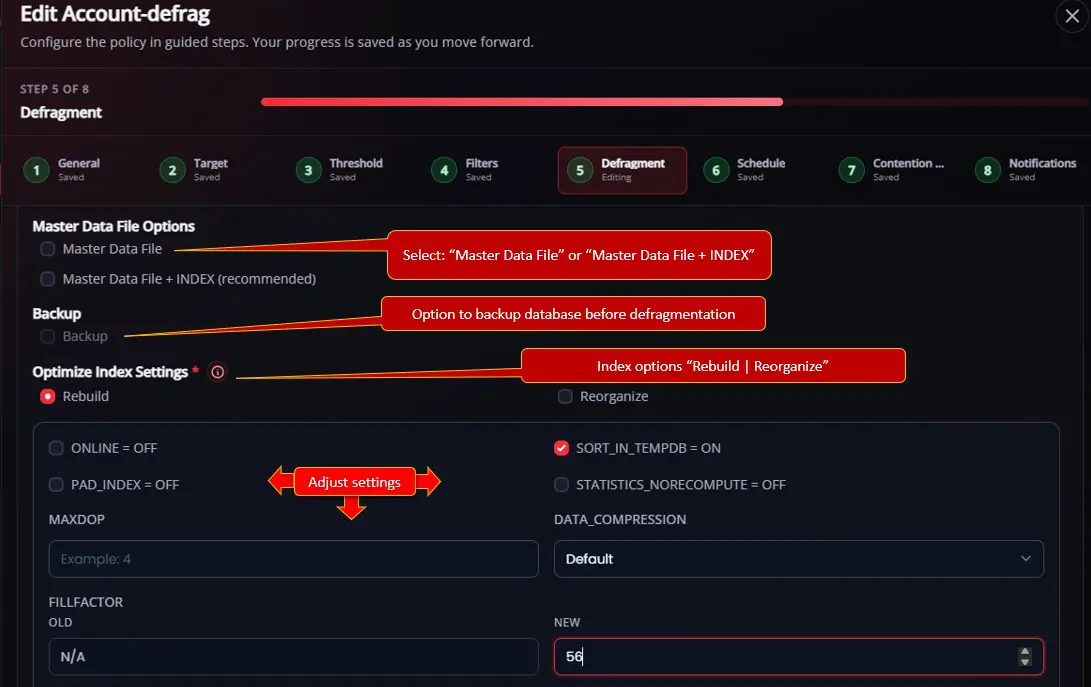
Flexible Defragmentation Options
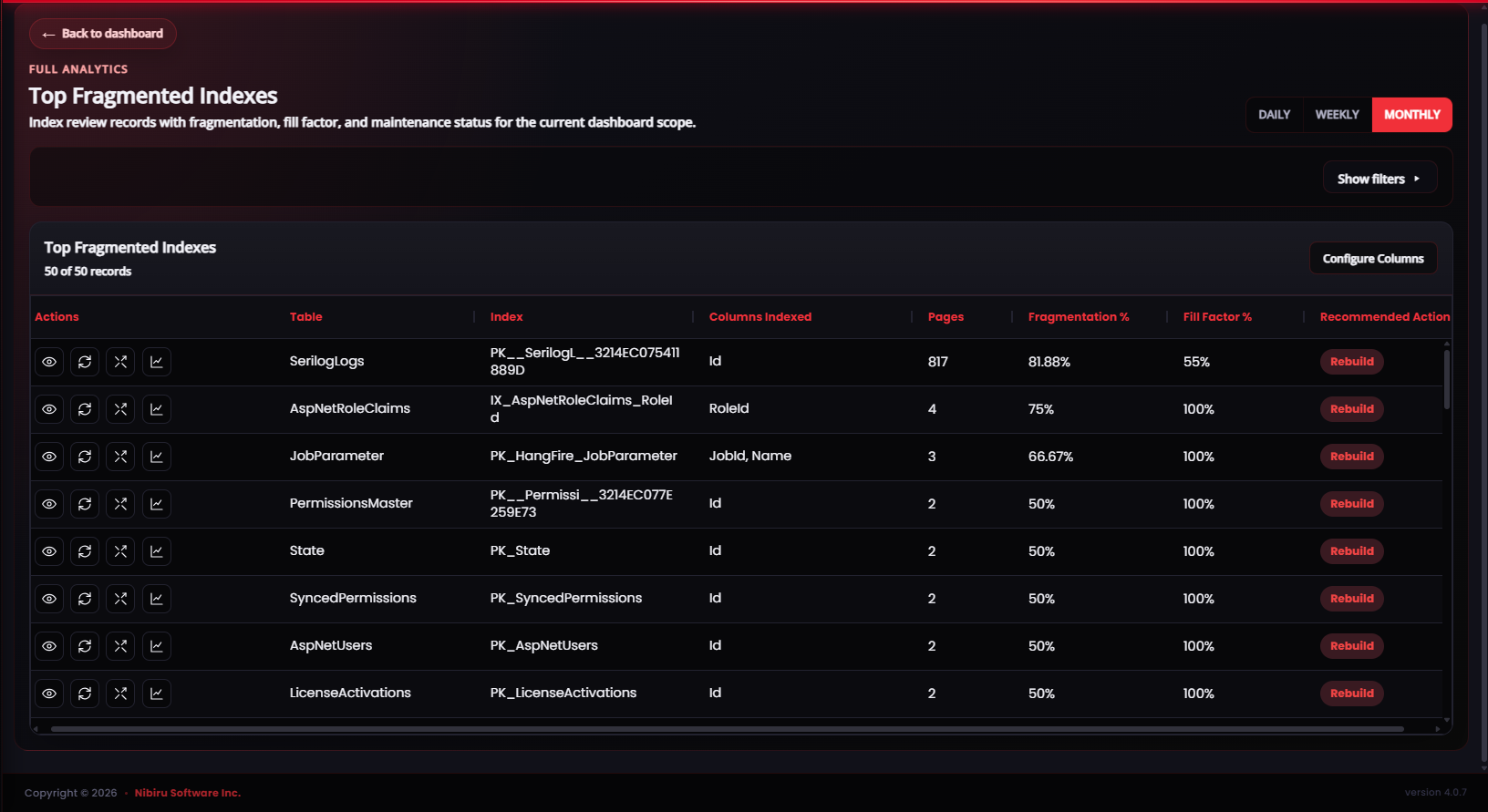
Top Fragmented Indexes
When SQL Server query performance begins to degrade, database administrators often rebuild indexes to reduce fragmentation and restore optimal performance.
SQL DBD provides detailed visibility into index health by identifying the most fragmented indexes and presenting key metrics, including index type, cardinality, row count, page count, fragmentation percentage, and fill factor percentage. Each index is also assigned a status indicator— Acceptable, Watch, or Critical —to help administrators quickly prioritize maintenance activities and improve database performance.
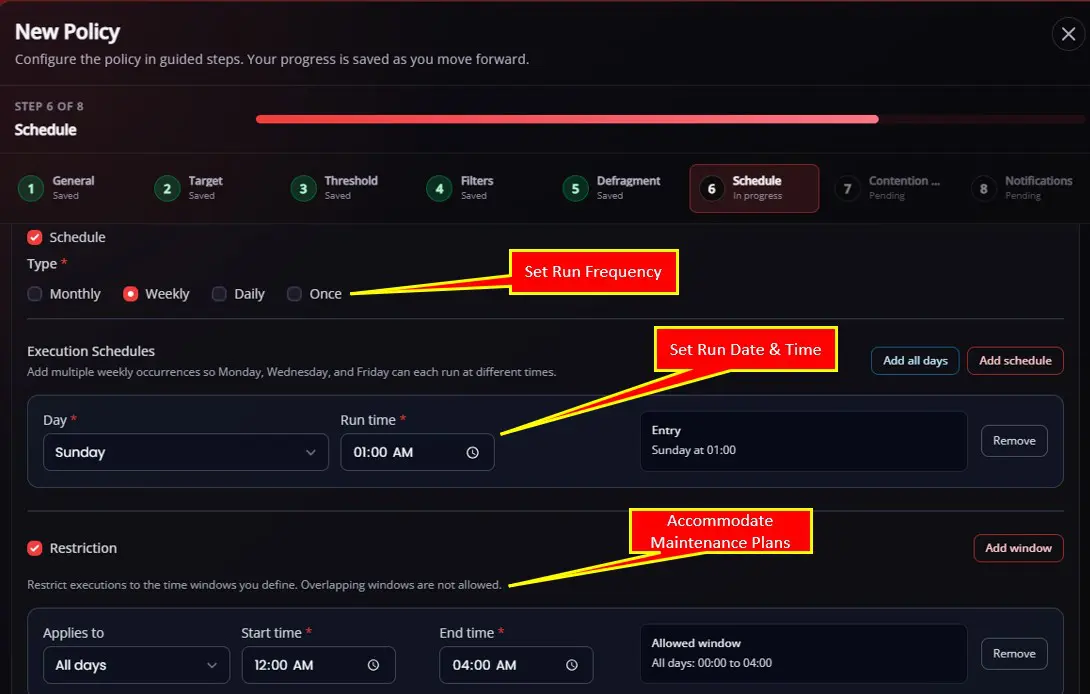
Flexible Scheduling Ensures Policy Execution
Flexible Scheduling Ensure Policy Execution
Automate MDF and index defragmentation maintenance with powerful, policy-based scheduling designed for SQL Server environments of any size.
Create Reusable Defragmentation Policies
Define policies once and apply them across one or multiple databases. Policies can be configured to run:
Daily – Ideal for highly transactional systems requiring frequent index maintenance.
Weekly – A balanced option for most production workloads.
Monthly – Suitable for databases with lower fragmentation rates.
One-Time Execution – Schedule a maintenance task to run on a specific date and time.
On-Demand – Execute policies manually whenever maintenance is required.